
The short answer
If your AC is blowing warm air, running constantly, making new noises, or leaking water, it likely needs repair. A technician will diagnose the cause, explain your options, and recommend repair or replacement based on your system's age, condition, and the cost of the fix.
When your air conditioner stops keeping up on a hot afternoon, you want to know what's wrong, what it will take to fix, and whether it's worth fixing at all. ExpertFlow HVAC Repair Service handles AC repair for homeowners in Pleasanton and nearby cities, including Dublin, Livermore, San Ramon, and Danville. This page explains the signs that your system needs attention, what our technicians check during a visit, how we help you decide between repair and replacement, and what affects the cost of a repair. Most AC problems give some warning before a full breakdown. Catching them early usually means a simpler fix and less time without cooling.
Signs Your Air Conditioner Needs Repair
Air conditioners rarely fail without warning. Small changes in how your system sounds, smells, or performs often point to a specific problem. Some of these problems can be handled with a simple adjustment. Others get worse and more expensive the longer the system runs.
Schedule a repair visit if you notice any of the following:
- Air from the vents feels warm or only slightly cool
- The system runs for long stretches without reaching the thermostat setting
- Some rooms stay noticeably warmer than others
- Grinding, squealing, rattling, buzzing, or banging sounds from the indoor or outdoor unit
- The system turns on and off in short, frequent cycles
- Water pooling near the indoor unit or dripping from ceilings or walls
- Ice on the refrigerant lines or the outdoor coil
- Burning, musty, or electrical smells when the AC runs
- Higher utility bills without a change in how you use the system
- The outdoor unit won't start, or the breaker keeps tripping
What We Check During an AC Repair Visit
A good repair starts with an accurate diagnosis. Replacing parts by guessing wastes your money and often leaves the real problem in place. Our technicians work through the system step by step to find the cause, not just the symptom.
Depending on what you're seeing, a diagnostic visit typically covers these areas:
- Thermostat settings, wiring, and communication with the system
- Electrical connections, capacitors, contactors, and breakers
- Compressor and condenser fan motor operation
- Refrigerant pressures and signs of a leak
- Condition of the indoor evaporator coil and outdoor condenser coil
- Air filter, blower motor, and airflow through the system
- Condensate drain line, pan, and safety switch
- Ductwork connections and obvious leaks where accessible
Repair or Replace: How to Decide
Many AC problems are worth repairing. A failed capacitor, a clogged drain line, or a worn contactor is usually a straightforward fix that returns the system to normal operation. We'll tell you plainly when a repair makes sense.
Replacement becomes worth considering when the system is older, needs a major component such as a compressor, has repeated refrigerant leaks, or has needed several repairs in a short time. We'll walk you through the condition of your equipment so you can weigh one repair against the ongoing cost of keeping an aging system running.
If you do replace, a heat pump is one option, since it handles both cooling and heating. Bay Area Air District rules require natural gas furnaces manufactured from 2029 on to meet a zero-NOx standard, which points many homeowners toward heat pumps when a furnace is eventually replaced. Those rules do not require you to replace working equipment. They apply only when an existing furnace fails or is replaced.
The federal tax credit for qualifying heat pumps covered systems placed in service before December 31, 2025, so it is not available for new installations. You can check BayREN and your local clean energy provider for current incentives. Because amounts and availability change by funding cycle, we confirm the current offer before including it in a quote.
What Affects the Cost of AC Repair
Every repair is different, so the cost depends on what we find. We explain the diagnosis and the cost of the recommended repair before any work begins, so you can make the decision.
The main factors that affect repair cost include:
- The part that failed and whether it's a common or specialized component
- Whether the problem involves refrigerant, which adds testing, leak repair, and recharging
- The age and brand of your system and how readily parts are available
- Where the equipment is located, such as a tight attic, crawl space, or rooftop
- How long the repair takes once the cause is identified
- Whether more than one problem is found during the diagnosis
How an AC Repair Visit Works
When you contact us, we'll ask what you're noticing, how long it's been happening, and the basic details of your system. That helps the technician arrive prepared.
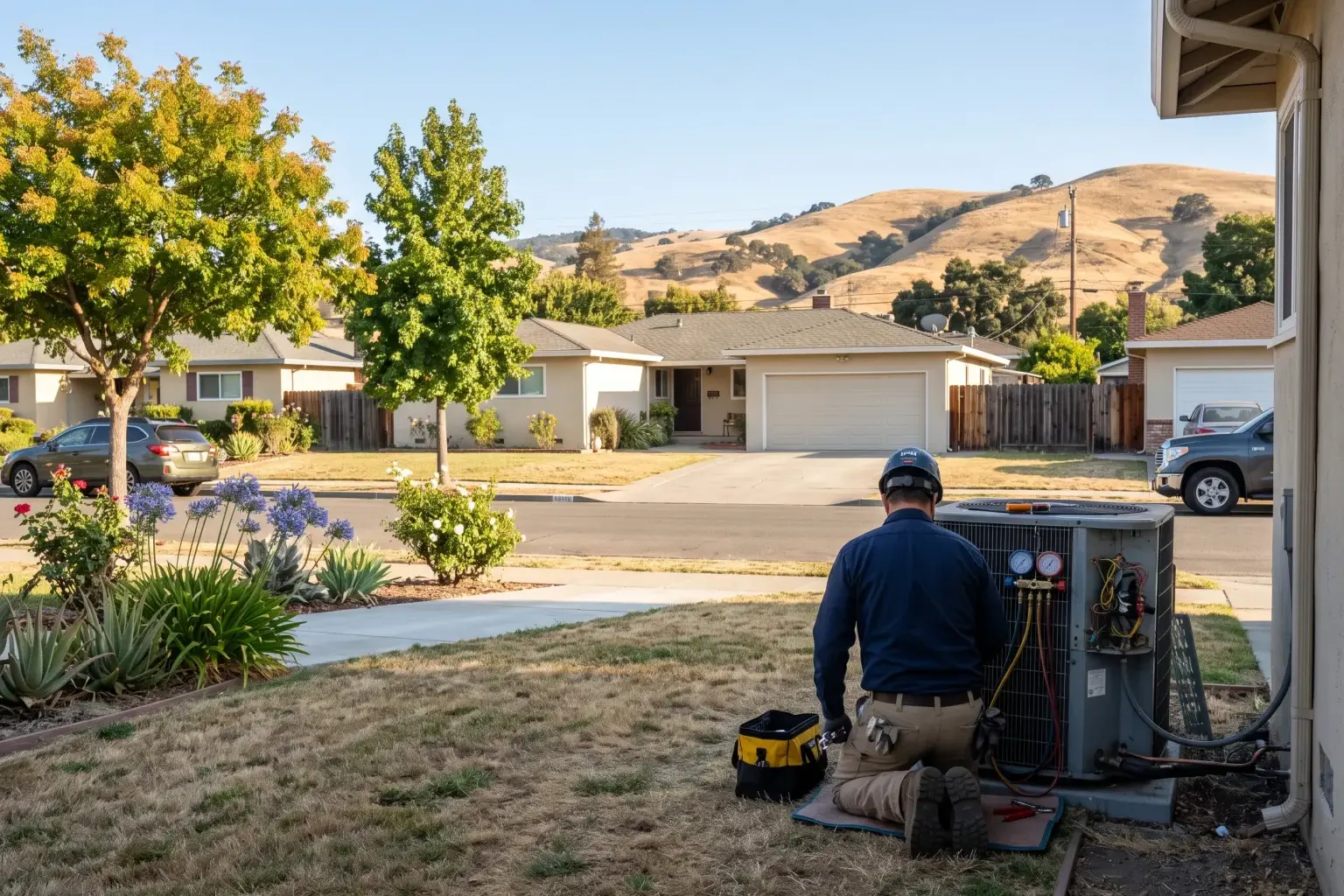
At your home, the technician will listen to your description, inspect the indoor and outdoor equipment, and run diagnostic tests to find the cause. Once the problem is identified, they'll explain what's wrong in plain terms, show you the affected part when possible, and lay out your options along with the cost.
If you approve the repair, the technician completes the work, tests the system to confirm it's cooling properly, and reviews what was done. If replacement makes more sense, we'll explain why and give you time to consider it without pressure. Before leaving, the technician can also point out simple steps that help prevent the same issue, such as changing filters on schedule and keeping the outdoor unit clear of plants and debris.