The short answer
HVAC maintenance is a hands-on inspection, cleaning and test of your furnace, air conditioner or heat pump. It catches worn parts and airflow problems before they cause a breakdown. Most systems need a visit once a year, and heat pumps often do better with one visit before summer and one before winter.
Your heating and cooling system works hardest during the weeks you need it most: hot summer afternoons and cold, damp winter nights. Routine maintenance finds small problems before they turn into a no-heat or no-cool emergency. These include a clogged filter, a weak capacitor or a dirty flame sensor. ExpertFlow HVAC Repair Service provides maintenance visits for furnaces, air conditioners and heat pumps in Pleasanton, Dublin, Livermore, San Ramon and nearby communities. This page covers how to tell when your system is due, what a visit includes, how to think about repair versus replacement and what to expect from start to finish.
Signs your system needs maintenance
Most systems benefit from a check once a year. Heat pumps handle both heating and cooling, so they often do better with two visits: one before summer and one before winter. Apart from the calendar, these signs suggest it's time to schedule:
None of these signs means something is broken. They often point to a dirty filter, a clogged drain line or a part starting to wear out. A maintenance visit is meant to catch exactly these problems.
- Some rooms heat or cool unevenly, or airflow from the vents feels weaker than it used to
- The system runs longer than normal or turns on and off every few minutes
- Energy bills are creeping up even though you haven't changed how you use the system
- You hear new noises, such as rattling, squealing, grinding or a loud bang when the furnace lights
- A burning or musty smell lingers after the first few minutes of operation
- There is water around the indoor unit, or ice on the refrigerant lines or outdoor coil
- Dust builds up faster than usual, or allergy symptoms get worse indoors
- No one has looked at the equipment in more than a year
What we check during a maintenance visit
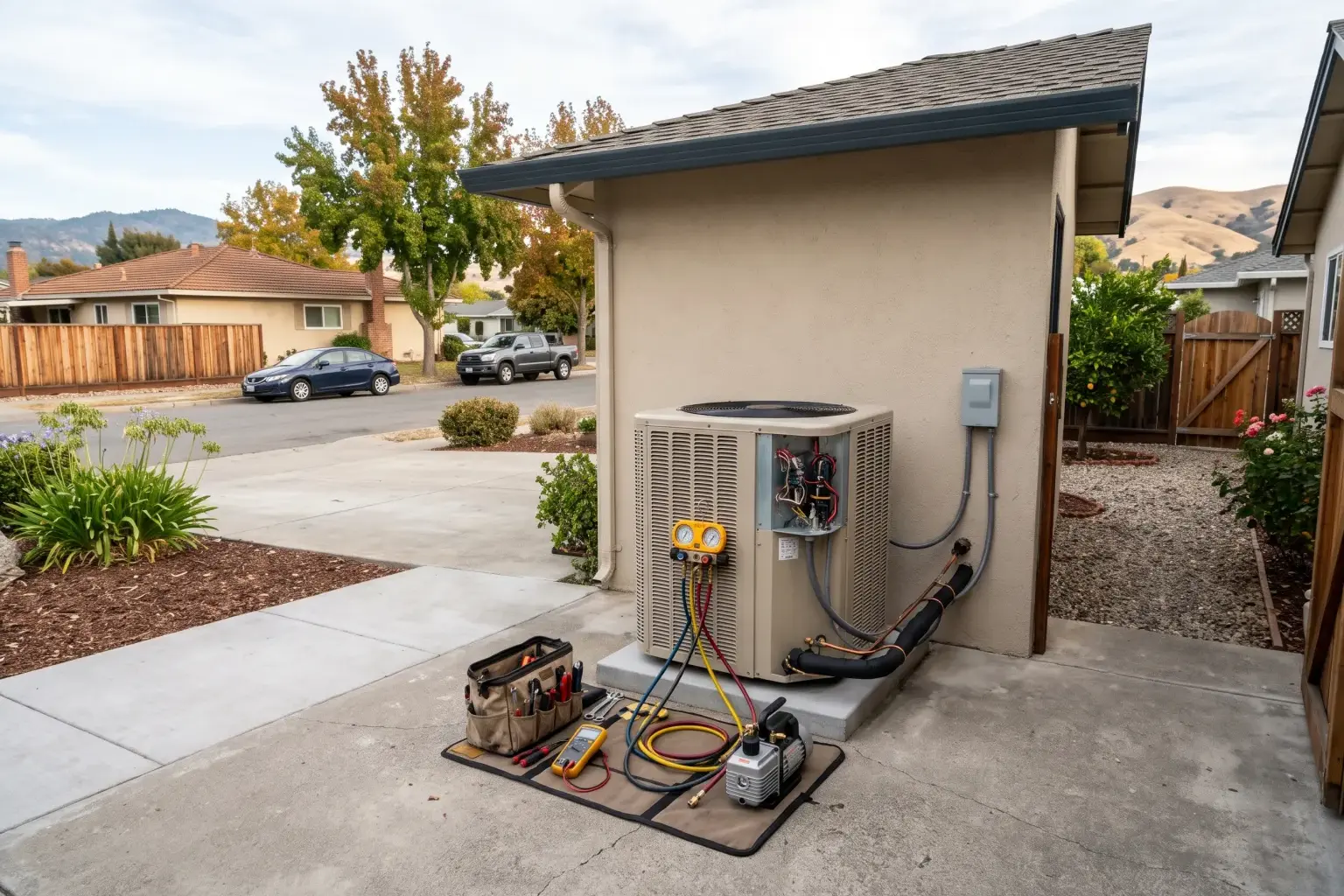
A maintenance visit is a hands-on inspection, cleaning and test of the whole system, not a quick look at the thermostat. The exact checklist depends on your equipment: a gas furnace with central air, a heat pump or a ductless system. A typical visit includes:
We also look at visible ductwork and vents for obvious leaks, disconnected sections or blockages. If we find something that needs repair, we'll explain what it is and why it matters. We'll get your approval before doing any additional work.
- Checking the air filter, cleaning or replacing it, and noting the right size and type for your system
- Testing that the thermostat works and reads the temperature correctly
- Inspecting the blower motor, fan wheel and belt (if your system has one), and cleaning debris from the blower compartment
- Tightening electrical connections and testing the electrical parts that start and run the motors
- Cleaning the outdoor coil and clearing leaves and debris from around the outdoor unit
- Checking refrigerant pressures and temperatures for signs of a leak or the wrong refrigerant level
- Flushing the drain line that carries away water from the indoor unit, and checking the drain pan
- On gas furnaces, inspecting the burners, flame sensor, igniter and heat exchanger, and checking the venting and gas pressure
- Testing the safety shutoffs
- Measuring air temperature going into and coming out of the system to confirm it heats and cools properly
Repair or replace: what a maintenance visit can tell you
Maintenance gives you an honest picture of your equipment's condition. Most of the time, the result is simple: the system is clean, tested and ready for the season. Sometimes we find a part that's failing. In that case, we'll explain your options and the reasons for each. You can repair it now, keep an eye on it or start planning a replacement.
Repair usually makes sense when the problem is a single part, the rest of the system is in reasonable shape and your home stays comfortable. Replacement is worth discussing in other cases. These include frequent repairs, failure of a major part like the compressor or heat exchanger, or a system that can no longer keep up with your home.
If you have a gas furnace, it helps to know the local rules. Under Bay Area Air District Rule 9-4, natural gas furnaces manufactured from 2029 on must meet a zero-NOx emission standard. In practice, that points homeowners toward heat pumps when they replace a furnace after that date. The rule does not require you to replace working equipment. It applies only when an existing furnace fails or is replaced. Keeping your furnace well maintained lets you get full use out of it while you plan ahead.
If you're considering a heat pump, check BayREN and your local clean energy provider for current incentives for heat pumps and other electric upgrades. Amounts and availability change with each funding cycle, so we confirm the current offer before including it in any quote. The federal Energy Efficient Home Improvement Credit (25C) covered qualifying heat pumps placed in service before December 31, 2025. It is not available for new installations after that date.
What affects the cost of maintenance
Every home and system is different, so we'll explain pricing for your situation before any work begins. The main factors are:
- The type of system: furnace and air conditioner, heat pump, ductless mini-split or a combination
- How many units you have, since some homes have separate systems for upstairs and downstairs
- The age and condition of the equipment, including how long it's been since the last service
- How easy the equipment is to reach, such as units in tight attics, crawl spaces or closets
- Whether parts or repairs are needed beyond routine cleaning and testing
- Whether you schedule one visit a year or separate visits for heating and cooling
How a maintenance visit works
When you contact us, we'll ask what kind of system you have, roughly how old it is and whether you've noticed any problems. That helps the technician bring the right filters and parts.
At your home, the technician will ask about any comfort issues, then inspect, clean and test the system. The technician will need access to the indoor unit, the outdoor unit and the thermostat. Most visits are finished in a single appointment.
Before leaving, the technician will explain what was found, show you any worn parts and recommend next steps if needed. You'll also get practical tips, such as how often to change your filter and how to keep the outdoor unit clear.
Good times to schedule are spring, before summer heat arrives, and early fall, before the first cold nights. Booking ahead of the busy season makes it easier to find a time that works for you.